 Motivating Fitness
A gym-bag checklist that starts when you get home
Motivating Fitness · Practical routines · September 28, 2026
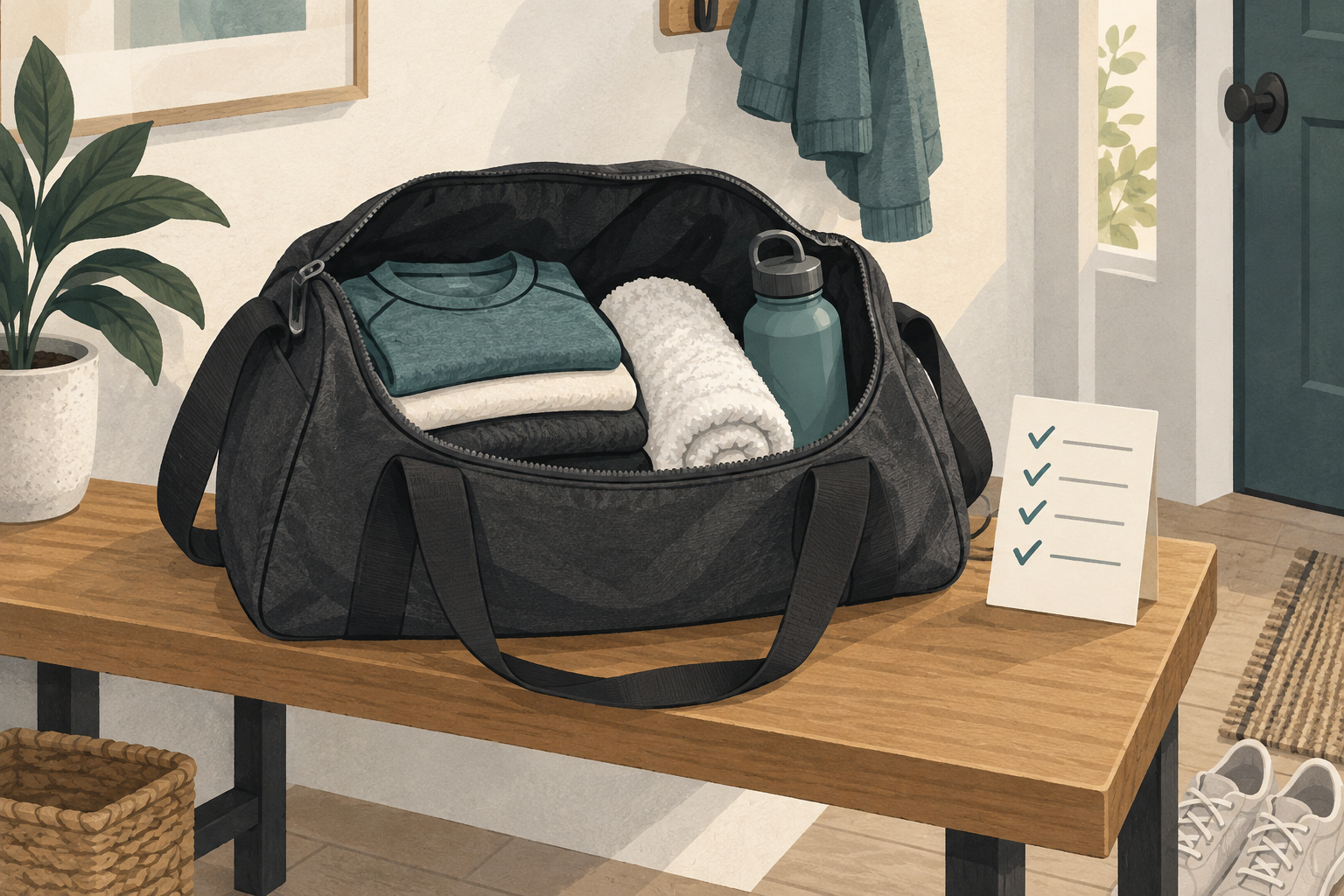
A bag can look packed while still being full of yesterday's kit. If you repeatedly discover the missing item just before leaving, try moving the check to the moment you unpack. The aim is modest: know what is ready, what needs cleaning and what must go in later.
This is an organization suggestion, not a promise that packing a bag will solve motivation. Start with the things you already use. You do not need to buy a new bag or fill it with accessories.
1. Empty before you refill
When you get home, remove used clothing, towels, food containers and other items that need attention. Put them where you actually deal with them—laundry, washing or disposal—rather than moving them into a second pile beside the bag.
Then look at what remains. An empty bottle and a clean filled bottle may occupy the same pocket, but they represent different amounts of preparation. Check the state of each item, not just whether something is there.
2. Split your list into three groups
Use this as a starting template and cross out anything your routine does not require.
| Stays in the bag when ready | Replaced after use | Added before leaving |
|---|---|---|
| Gym access card or lock, if required | Clean training clothes and socks | Phone, keys or wallet you use elsewhere |
| Session equipment you already use | Clean towel, if needed | Water bottle after cleaning and filling |
| A short written packing list | Used toiletries or other supplies | Anything still drying or charging |
These are categories, not universal essentials. Your gym's facilities and rules determine what you need. Someone who changes at home has a different list from someone going straight from work. Equipment for an activity you are not doing today does not automatically belong in today's bag.
3. Make unfinished items visible
If a towel is still drying, leave a note that says “add towel” rather than assuming you will remember. Keep that note with the bag or on the reminder you already check before leaving. Remove it once the item is packed.
For example, an after-work gym bag might be ready except for a bottle and a phone. A two-item departure check is easier to understand than the vague instruction “get ready for the gym.” This is a proposed way to organize the task; see whether it suits your day.
4. Choose a place that fits the route
Leave the bag somewhere visible that does not obstruct a walkway. If you travel directly from work, make it part of your work departure check. If you train at home, a small ready area may be more useful than a bag. Match the system to the trip you actually make.
Planning around practical barriers is consistent with the general approach in NIDDK's guide to changing habits. The specific packing system here is an editorial suggestion, not a method that NIDDK has tested or endorsed.
Your reset at a glance
The next-trip check
Before leaving, ask: Can I get in? Do I have what this session needs? What still has to be added? After the next visit, change the list if you brought things you never used or missed something important.
A useful reset has a clear finish: the used items are out, the ready items are in, and the remaining tasks are named. Keep that small enough to repeat on an ordinary day.